


Where Do I Begin? Planning Your Wedding Look with Intention

Starting your wedding planning journey can feel like stepping into a vast, uncharted space. The choices around your dress, the silhouette, fabric, and style may seem endless, and the pressure to get it right can be overwhelming. Yet, this moment offers a unique opportunity to shape a look that truly reflects who you are and the day you envision. Approaching your wedding look with intention helps you move beyond fleeting trends and creates a meaningful, personal experience.

Consider the Silhouette and Overall Shape
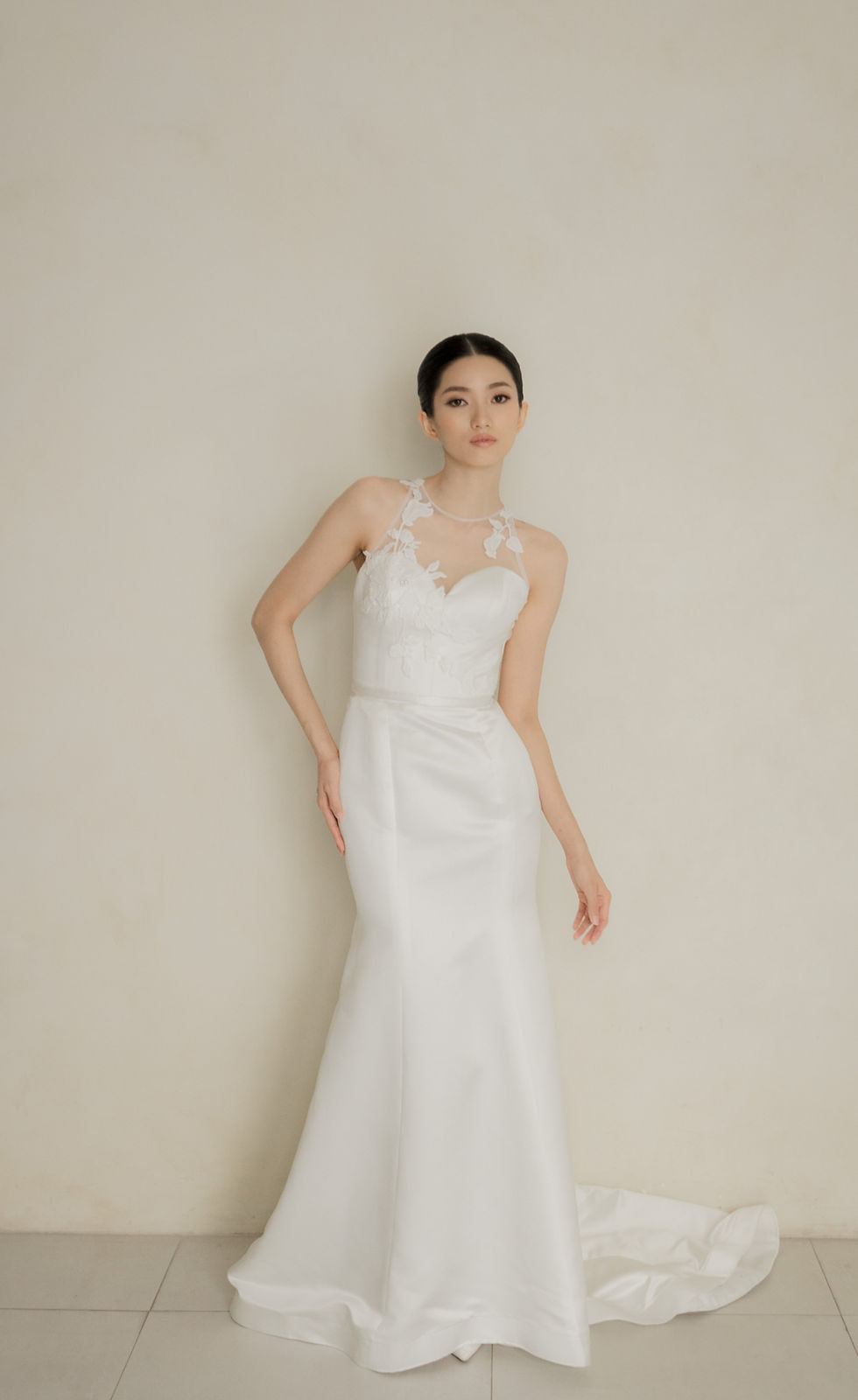
The silhouette of your gown sets the foundation for your wedding look. It influences how you move, how you feel, and how the dress interacts with your surroundings. Think about shapes that resonate with your personality and body. Are you drawn to the timeless elegance of an A-line, the drama of a ball gown, or the sleekness of a fitted sheath? Each silhouette carries a different energy and presence.
Rather than choosing based on what’s popular or trending right now, reflect on what feels natural. For example, if you prefer simplicity and ease, a clean, streamlined shape might suit you better than a heavily layered design. If you want to emphasize your waist or shoulders, silhouettes like a defined A-line, structured bodice, basque waist, or neckline placements can highlight these areas with quiet clarity.

Often, it is less about identifying the “right” silhouette, and more about noticing which forms you return to instinctively: those that feel familiar, effortless, or quietly right when you see them on yourself. From there, the rest of the design can begin to take shape with more clarity and ease.
Explore Fabric and Texture
Fabric choice shapes the mood of your gown. Silk, chiffon, tulle, satin, lace—each material offers a distinct texture and weight. Consider how the fabric will feel against your skin, how it moves, and how it complements the venue and season.
Soft, flowing fabrics create a romantic, ethereal effect, while structured materials lend formality and precision. For instance, a silk crepe gown drapes elegantly and suits a modern, minimalist aesthetic. In contrast, lace overlays add intricate detail and a sense of tradition.
Balance Structure and Softness
The level of structure in your dress affects comfort and silhouette. Structured gowns use boning, corsetry, or tailored seams to shape the body, offering support and defined lines. Softer gowns rely on draping and fluidity, allowing for more movement and a relaxed feel.
Think about how you want to feel throughout your day. If you expect to be active—dancing, walking outdoors, or moving between spaces—a softer gown might offer more freedom. If you desire a polished, sculpted look, structured elements can provide that clarity.

Practical Considerations Matter
Your wedding venue, the timeline of your day, and how much movement you anticipate should influence your dress choice. A gown perfect for a formal cathedral ceremony might feel out of place at a beachside gathering. Similarly, heavy fabrics or long trains can become cumbersome during a day filled with activity.
Ask yourself:
Will you be walking on grass, sand, or marble?
How many hours will you wear the dress?
Will you need to change for different parts of the day?
These practical questions help you select a gown that supports your experience rather than complicates it.

Align with Your Personal Style
Your wedding dress should feel like an extension of your identity, not a costume. Reflect on your everyday style and what makes you feel confident. Do you prefer clean lines or ornate details? Minimalist or vintage-inspired? Bold or understated?
This alignment creates a sense of ease and authenticity. For example, if you usually wear simple, modern clothing, a heavily embellished gown might feel unfamiliar. Instead, a sleek dress with subtle accents could better express your personality.
Understand How These Decisions Connect
Each choice you make, from silhouette to fabric to practicality, is interconnected. The shape you choose influences fabric options; the venue affects how much structure you need; your style guides the overall mood. Viewing these elements as parts of a whole helps you create a cohesive look rather than a checklist of unrelated decisions.
Take time to explore combinations and imagine how they work together. Sketches, mood boards, or trying on different styles can reveal what truly resonates.
The Value of Working with a Dedicated Bridal Consultant
More than guidance, working with the right bridal consultant is about being understood.
At our studio, the process begins not with a fixed design, but with a conversation that takes into account how you naturally gravitate towards certain lines, fabrics, and levels of structure. Rather than directing you toward a predetermined outcome, we work to distill what already feels aligned, and shape it into something clear and cohesive.
Each wedding look is developed from the ground up. This allows every decision, from silhouette and proportion to fabric and finish, to be considered in relation to you, rather than adapted from an existing piece.
Our approach to design is intentionally restrained. With a focus on clean lines, balanced proportions, and thoughtful construction, each element is introduced with purpose. This often means refining rather than adding, allowing the silhouette and fabric to remain central.
Because the process is built around you, the gown is shaped not only to your measurements, but to the setting and rhythm of your day. We consider how you move, what you feel at ease in, and how you wish to carry yourself through it.
There is also space here to explore without pressure. Ideas can be tested, adjusted, or set aside entirely, with guidance that brings clarity rather than urgency. What emerges is not a collection of features, but a gown that feels resolved quietly, and with intention

Moving Forward with Intention
Starting your wedding planning with intention means embracing the process as a journey of discovery. Each decision you make shapes a look that supports your day and reflects your true self. Rather than rushing, allow yourself space to explore, reflect, and refine.
If you feel ready to begin this thoughtful process, consider booking a consultation with a bridal expert. This step can bring clarity and confidence, helping you create a wedding look that feels both beautiful and meaningful. Your gown is more than fabric and shape—it is part of your story.

Comments